REVIEW · PARIS
Private Paris City Night Sightseeing Tour
Book on Viator →Operated by Tour Up in Europe · Bookable on Viator
Paris at night feels like a moving postcard. This private tour is built for maximum sightseeing per hour with hotel pickup and an air-conditioned ride, so you can hit the big landmarks without wasting time in traffic. One possible drawback: with so many stops packed into about 3 hours, you may feel a little rushed if you love long museum-style visits.
What makes it especially worth your attention is the private setup. You set the pace, and the guide can steer the night toward what you care about most—big monuments, photo stops, or neighborhood atmosphere. In at least one guide name that comes up in the mix, Nataly, the emphasis was on being personal and adaptable, which is exactly the vibe you want after dark.
This is a good fit if you’re spending a tight amount of time in Paris or you prefer your sightseeing at a slower, calmer feel than midday crowds. The night lighting makes even familiar streets look new, and the vehicle helps you keep moving. Just note: entrance to the Eiffel Tower isn’t included, so you’ll want to plan for tickets if going up is your goal.
In This Review
- Key things to know before you go
- Why a private night route works so well in Paris
- Champs-Élysées after dark: where the photo postcard becomes real
- Arc de Triomphe and Place de la Concorde: monuments with sharp edges
- Arc de Triomphe under the night sky
- Place de la Concorde: power, execution, and size
- The Left Bank and classic night contrast: Louvre to the bridges
- The Louvre’s role in a night loop
- Crossing into Île de la Cité: where Paris starts
- Notre-Dame at the far end of the island
- Getting to the Panthéon idea (Saint-Geneviève’s transformation)
- Pont Alexandre III: the bridge as a monument
- Moulin Rouge, Sacré-Cœur, and Montmartre’s big night views
- Moulin Rouge: cabaret that helped invent a myth
- Sacré-Cœur: Roman-Byzantine white and the mosaic ceiling
- Luxembourg Gardens and Saint-Germain-des-Prés: calmer Paris on the move
- Luxembourg Palace gardens
- Saint-Germain-des-Prés on the Left Bank
- Invalides, Grand Palais, and Petit Palais: Paris built for exhibitions
- Hôtel des Invalides: a care institution with royal roots
- Pont Alexandre III, again—then the exhibition halls
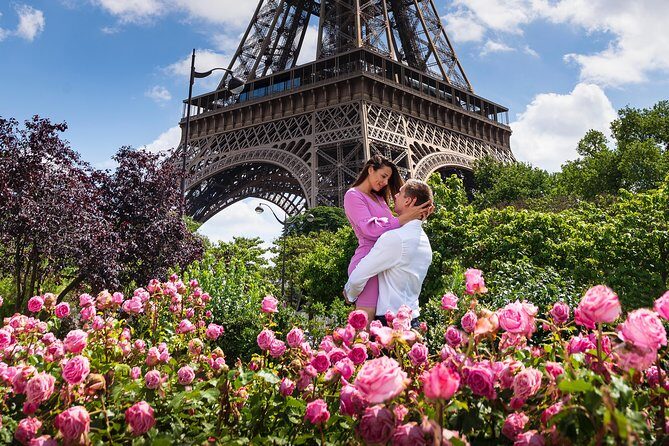
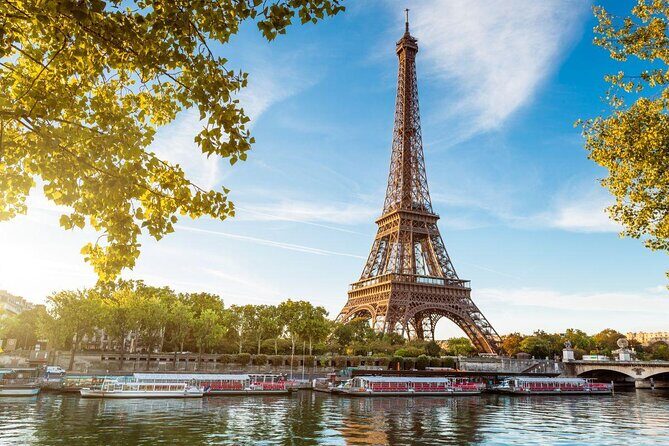
- Trocadéro viewpoint and Eiffel Tower planning that saves time
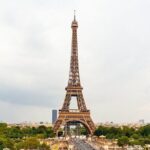
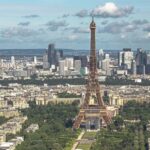
- Eiffel Tower: what’s included vs. what you should plan
- Price and value for a private group of up to two
- Tips to get the best night from this tour
- Should you book this private Paris night tour?
- FAQ
- FAQ
- How long is the Private Paris City Night Sightseeing Tour?
- What’s the group size for this private tour?
- Is hotel pickup included?
- What language is the tour offered in?
- Are Eiffel Tower tickets included?
- What’s included in the price?
Key things to know before you go
- Private pacing for your group: You can linger or move on, rather than being dragged by a bus schedule
- Hotel pickup + WiFi on board: Easy start, low-friction ride, and you can stay connected
- A tight loop of major icons: Champs-Élysées, Arc de Triomphe, major bridges, and viewpoints
- Sacré-Cœur and Moulin Rouge are part of the story: You’ll see how Paris swings from glamour to views
- Trocadéro is your Eiffel pre-game: It’s designed for the shot before you commit to tower entry
- Eiffel Tower tickets not included: You can still enjoy the exterior views, but plan for a climb separately
Why a private night route works so well in Paris
Night tours aren’t just about pretty lights. In Paris, timing is everything. This route is designed to get you to the right places while you’re most likely to enjoy them—after dark, when traffic and day-tripper energy can be easier to manage, and when many monuments glow instead of glare.
The big practical win is the air-conditioned vehicle. Paris can feel muggy in summer, and even in cooler months, being in and out of transit stops adds up fast. Here, you’re transported between key areas, which helps you cover more ground in about 3 hours than you could on foot.
You also avoid the most annoying part of many DIY nights: waiting. You’re not trying to piece together metro transfers with strollers, luggage, or camera gear. With hotel pickup at the lobby and a private guide handling the rhythm, you’ll spend your energy on seeing, not figuring.
Other Paris city & sightseeing bus tours we've reviewed at Paris
Champs-Élysées after dark: where the photo postcard becomes real
The Champs-Élysées is the kind of avenue that’s easy to understand and hard to forget. It runs nearly 2 kilometers from Place de la Concorde to the Arc de Triomphe—long enough to feel like a stage, and straight enough to make it feel cinematic at night.
When you’re here in the evening, the street reads differently. Daytime makes it feel like a major shopping artery. Nighttime makes it feel like a grand promenade. The guide can help you orient quickly: what you’re looking at, how the avenue lines up, and which direction matters for your photos.
What you’ll enjoy most: the scale. Even if you’ve seen plenty of pictures, standing on or near this stretch gives you a better sense of how Paris builds perspective—especially when you know the Arc is at one end.
One thing to consider: this is a popular corridor. It won’t feel empty, so if you want ultra-clean photos with no background noise, you’ll rely on timing and your guide’s pacing.
Arc de Triomphe and Place de la Concorde: monuments with sharp edges
This is where the tour stops being just scenery and turns into story.
Arc de Triomphe under the night sky
The Arc de Triomphe honors those who fought and died for France during the French Revolution and the Napoleonic Wars. Inside and outside, you’ll see the names of French victories and generals—built to keep memory visible, not tucked away.
Then there’s the detail people love because it’s hauntingly simple: under the vault lies the Tomb of the Unknown Soldier from the First World War. At night, that somber context lands harder. It’s not just a landmark; it’s a memorial with gravity.
Place de la Concorde: power, execution, and size
Place de la Concorde is Paris’s largest square, about 18.8 acres (7.6 hectares). It was originally meant to glorify King Louis XV, but the French Revolution changed the script, and royals (including Louis XVI) were executed in this space.
When you’re standing in or near this square at night, you can feel why it became a political stage: it’s wide, open, and built for crowds. The scale is part of the message.
What you’ll enjoy most: seeing how monuments and squares act like theaters for history—built with intention, even when history takes it in a brutal direction.
Other city tours we've reviewed in Paris

The Left Bank and classic night contrast: Louvre to the bridges
Paris at night loves contrasts. You’ll feel it in the shift from grand boulevards to older, more atmospheric zones.
The Louvre’s role in a night loop
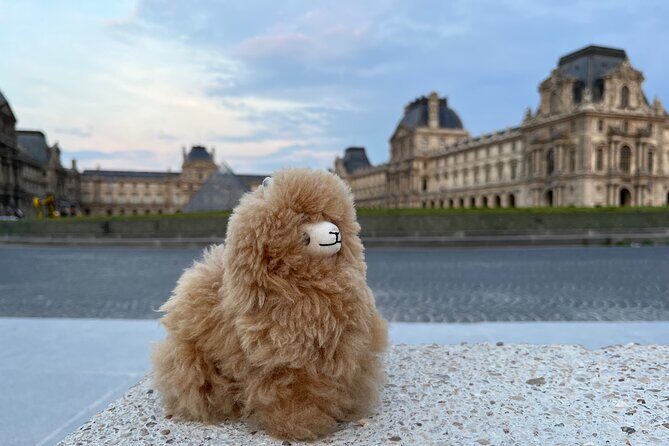
Even if you don’t go inside, the Louvre matters here because it anchors the walk-your-eyes experience. The museum’s collection spans work from ancient civilizations to the mid-19th century. That breadth is exactly why it’s such a powerful marker in Paris—this is not a single-era monument. It’s an entire timeline you can frame with your camera.
Crossing into Île de la Cité: where Paris starts
Your itinerary threads toward the center of Paris, the Île de la Cité, which is historically heavyweight even before you reach the famous cathedral.
Here’s why it matters: in 508, Clovis I established his palace on the island. By the 12th century it had become a major religious center, tied to Notre-Dame and the royal chapel of Sainte-Chapelle, plus the city’s first hospital, the Hôtel-Dieu. You also find the oldest surviving bridge here: Pont Neuf.
If you like “how did this city begin” thinking, this is a great moment. Paris’s oldest structures aren’t just old—they explain the city’s layout.
Notre-Dame at the far end of the island
Notre-Dame de Paris is a Gothic masterpiece built in the Middle Ages, with work from the 13th to the 15th century. It suffered major damage during the French Revolution and was restored in the 19th century by architect Viollet-le-Duc.
At night, you’re not reading every architectural detail like you would in daylight, but you’re doing something else: you’re letting the outline and scale hit first. Gothic architecture often looks best when the sky helps sketch it.
Getting to the Panthéon idea (Saint-Geneviève’s transformation)
There’s also a powerful tangent in the center-of-Paris story: Saint Genevieve’s Church was transformed during the French Revolution into a mausoleum for distinguished French citizens, modeled on the Pantheon in Rome.
This is one of those moments where Paris night sightseeing becomes more than “see the famous stuff.” You start noticing how one building’s purpose can change when politics changes.
Pont Alexandre III: the bridge as a monument
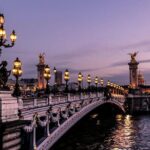
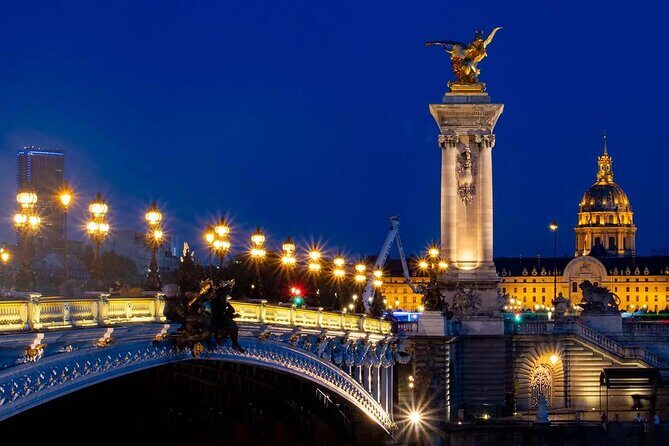
Your ride also passes Pont Alexandre III, classified as a historic monument and one of Paris’s most emblematic bridges because of its architecture and location.
Bridges in Paris aren’t just crossings. They’re viewpoints in their own right—places where Paris looks arranged.
Moulin Rouge, Sacré-Cœur, and Montmartre’s big night views
If you want proof that Paris can switch moods instantly, this section does it.
Moulin Rouge: cabaret that helped invent a myth
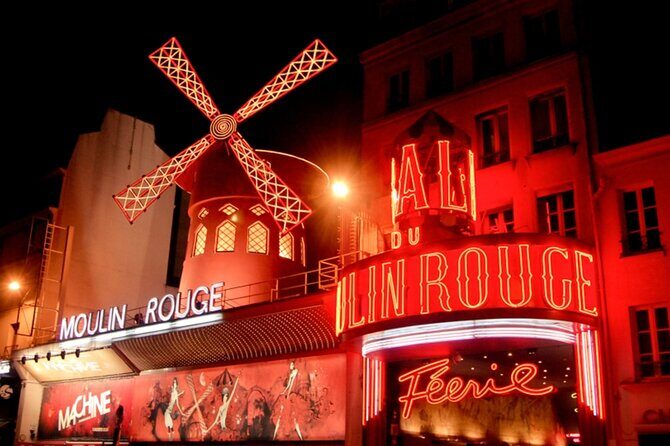
The Moulin Rouge became the most famous cabaret in the world for a reason. It opened on October 6, 1889, founded by Charles Zidler and Joseph Oller. The vibe was daring and extravagant from the start, and it’s been doing its job for over 130 years.
At night, Moulin Rouge reads as more than a building. It’s a symbol of performance culture and Paris self-mythology.
What to expect: the tour context helps you see what you’re looking at, instead of treating it like a simple landmark photo.
Sacré-Cœur: Roman-Byzantine white and the mosaic ceiling
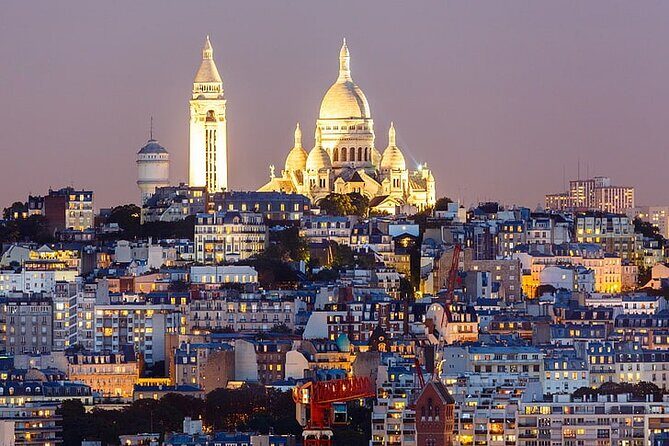
Then you climb up into Montmartre’s altitude—literally. At the top of the hill, Sacré-Cœur offers one of Paris’s most famous panoramic views, from 130 meters above ground.
Sacré-Cœur is Roman-Byzantine in style and recognizable by its white color. Inside, the ceiling is decorated with the largest mosaic in France, about 480 m².
This stop works especially well on a night tour because the view is the point. Even if you don’t linger for deep interior time, the city spread below is the payoff.
Consideration: if you’re sensitive to stairs or steep slopes, ask your guide how much time you’ll spend on foot at viewpoints, because Montmartre is naturally vertical.
Luxembourg Gardens and Saint-Germain-des-Prés: calmer Paris on the move
Not every stop here is meant to be loud. This is where the night becomes softer.
Luxembourg Palace gardens
The Luxembourg area begins with Marie de’ Medici. In 1612, she built the Luxembourg Palace as her residence, and the garden followed. Today, it’s owned by the French Senate, which meets in the palace.
The garden spans 23 hectares (56.8 acres) and includes lawns, tree-lined promenades, tennis courts, flowerbeds, and model sailboats on the octagonal Grand Bassin. There’s also the Medici Fountain, built in 1620.
At night, you might not spend time doing a full park ramble, but the guide can help you connect the dots: this is a designed retreat in the middle of a city known for movement.
Saint-Germain-des-Prés on the Left Bank
The Left Bank is tied to ideas, boutiques, and historic monuments. Saint-Germain-des-Prés in particular has long attracted artists and thinkers.
Even if you’re only seeing it from the route at night, the neighborhood feel is different from the grand-axis monuments. It’s Paris with more attitude and less glare.
What you’ll enjoy most: a break from “statue viewing” into “neighborhood mood.”
Invalides, Grand Palais, and Petit Palais: Paris built for exhibitions
This part of the night gives you architecture with purpose—buildings that were designed to stage art, power, or national pride.
Hôtel des Invalides: a care institution with royal roots
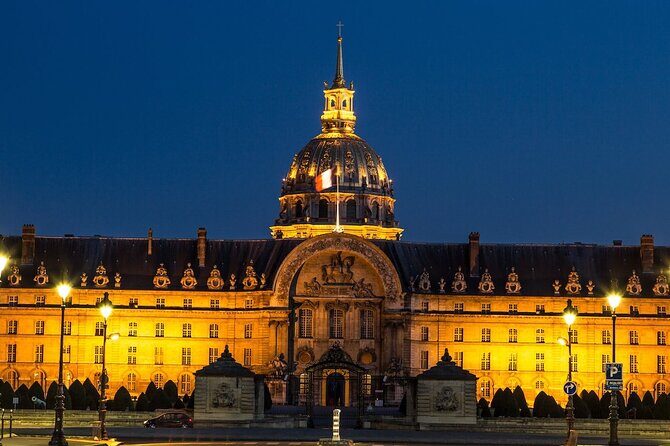
Hôtel Royal des Invalides was commissioned by Louis XIV around 1670 after there was no foundation to house wounded and homeless veterans. This is a reminder that Paris’s famous buildings weren’t always made for tourists; many were made to solve real problems.
Seeing it by night helps it feel monumental without needing interior access.
Pont Alexandre III, again—then the exhibition halls
The tour also hits the area around the major exhibition landmarks.
The Grand Palais was built for the Universal Exhibition in 1900 and dedicated by the French Republic to the glory of French art. It became a historic monument in 2000.
The Petit Palais was also tied to the exhibition, but the intent was different: it was designed to become a permanent fine arts museum after the show.
What you’ll enjoy most: understanding how Paris uses big events to build long-term culture. These aren’t temporary showpieces. They’re infrastructure for art and national identity.
Trocadéro viewpoint and Eiffel Tower planning that saves time
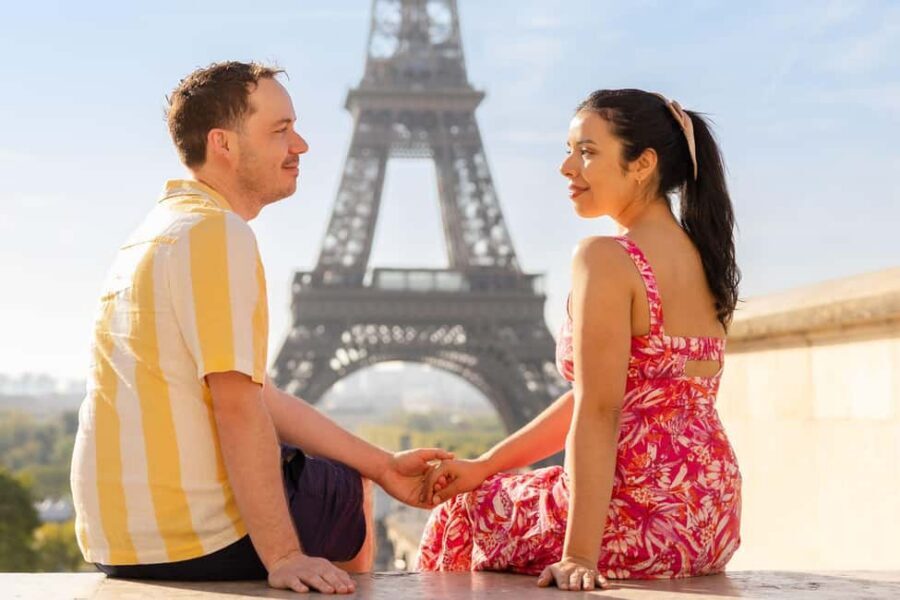
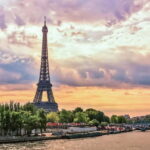
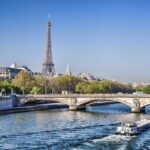
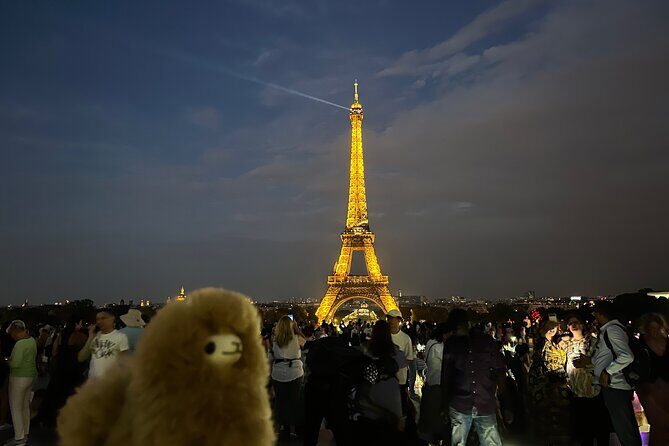
If you’re going to see the Eiffel Tower in a night tour, the lead-up matters. The route includes a stop at Palais du Trocadéro (also called Trocadéro).
This spot is famous because it’s basically positioned as an inverse to the Eiffel Tower across the Seine. There’s also a specific engineering layout that helps you get the ideal shot of the tower.
It’s listed with free admission and about 20 minutes—which is perfect for setting up your photos before you think about climbing.
Eiffel Tower: what’s included vs. what you should plan
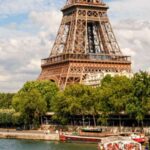
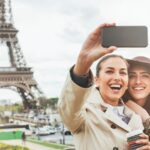
The important practical point: tickets to the Eiffel Tower are not included. That means you can still enjoy the exterior views, but if you want to go up, you’ll need to arrange the entry ticket separately.
If your heart is set on the climb, I recommend planning early so you don’t end up deciding on the fly when you’re already tired from the route.
What you’ll enjoy most: you get the Eiffel moment with less stress because you’re doing the viewpoint first, then deciding how far you want to go.
Price and value for a private group of up to two
At $540.69 per group (up to 2) for about 3 hours, this isn’t a bargain tour. But it also isn’t trying to be.
Here’s the value equation that makes sense:
- You’re booking a private guide experience, so you’re not splitting attention among a large group.
- You get private transportation, WiFi on board, air-conditioning, and bottled water.
- You also get hotel pickup, which cuts down on the time you’d otherwise spend walking to a meeting point and coordinating transit.
Where the price starts to feel like a smart move is when you’re comparing it to the cost of “three separate things” you’d likely do yourself: a guided night route, paid transfers, and multiple taxis or metro hops with camera stops.
For two people, the per-person cost becomes more reasonable than solo pricing—and because it’s private, you can tailor the night. If you’re the type who wants to choose what matters (monuments vs. neighborhoods vs. viewpoints), that flexibility has real monetary value.
One caution on value: if you’re alone and already planning to go up the Eiffel Tower, double-check that you’re comfortable paying extra for tower entry. The ride and viewpoint are included; the climb isn’t.
Tips to get the best night from this tour
Keep these in mind and the experience will feel smoother.
- Bring layers. Even in Paris nights, temperatures can shift, especially as you move between wide boulevards and higher viewpoints.
- Wear camera-ready shoes. You’ll likely do small walks at major stops and viewpoints.
- If Eiffel Tower access is important to you, line up tickets ahead of time so you don’t lose momentum at the final stage.
- Be ready to communicate clearly about pickup timing. This is private, and hotel lobby pickup depends on coordination.
Also, if you book close to your travel date, respond quickly to scheduling messages. Private tours work best when everyone’s on the same page about the correct time.
Should you book this private Paris night tour?
I’d book it if you want a fast, structured night that still feels personal. This tour fits well for first-timers who want the Paris icons—Champs-Élysées, Arc de Triomphe, Notre-Dame area, Montmartre views—and for couples or small groups who prefer being in control of pacing.
I’d think twice if you expect a slow, lingering experience at one or two sites. This route is designed to cover a lot in a short window. If your ideal Paris day is long museum time, you might use another day for that—and treat this night tour as your “get oriented and get wowed” evening.
If you’re aiming for the best value, go in with a clear priority list: Eiffel Tower, Sacré-Cœur views, and one or two neighborhoods you’re curious about. Then let the guide steer the night around your choices.
FAQ
FAQ
How long is the Private Paris City Night Sightseeing Tour?
It runs for about 3 hours.
What’s the group size for this private tour?
It’s private for your group, up to 2 people.
Is hotel pickup included?
Yes. Pickup is offered at the hotel lobby, and you’ll need to contact the operator to coordinate the pickup.
What language is the tour offered in?
The tour is offered in English.
Are Eiffel Tower tickets included?
No. Tickets to the Eiffel Tower are not included.
What’s included in the price?
Included features are private transportation, WiFi on board, an air-conditioned vehicle, all fees and taxes, and bottled water. Tips are not included.